The 5 P’s of Time Management for Students (Quick Guide)
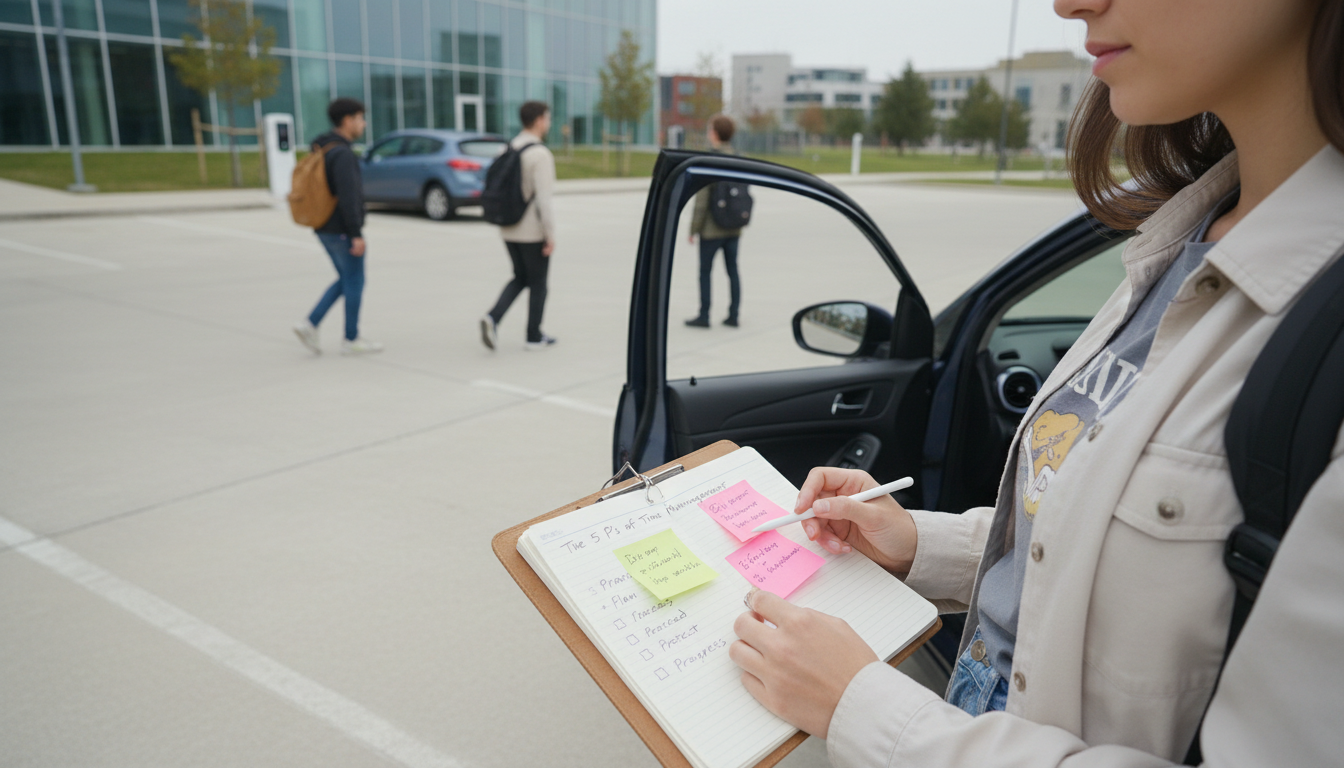
What are the 5 P’s of time management for students?
The 5 P’s of time management for students are a simple framework for turning big academic goals into daily actions: Prioritize, Plan, Prepare, Perform, and Pause. Used together, they help you stay focused, reduce last-minute stress, and make steady progress across classes, activities, and personal life.
1) Prioritize
Start by deciding what matters most today and this week. Identify deadlines, high-impact assignments, exams, and commitments, then rank them. A quick way to prioritize is to label tasks as “must do,” “should do,” and “nice to do,” so urgent, grade-moving work gets handled first.
2) Plan
Turn priorities into a realistic schedule. Block time for classes, work shifts, study sessions, and personal needs, then add specific task blocks (for example, “bio reading 30 minutes” instead of “study”). Planning works best when it’s time-based, not just a long checklist.
3) Prepare
Preparation removes friction before you begin. Gather materials, open the right tabs, set up your notes, and pick a distraction-light study spot. If you’ll be working in short bursts between classes, prepare a small “ready-to-go” task list for those pockets of time.
4) Perform
This is the execution stage: focus on one task at a time and finish what you started. Use a timer if needed, silence notifications, and aim for measurable outcomes (a completed outline, 10 solved problems, a drafted paragraph). Performance improves when tasks are small enough to start immediately.
5) Pause
Pausing protects your energy and attention. Build in short breaks, eat, hydrate, and sleep enough to learn efficiently. Also pause to review what worked and what didn’t, then adjust tomorrow’s plan so you keep improving without burning out.
For a deeper breakdown and examples students can apply right away, visit the main article.
FAQ
What is the best way to prioritize homework when everything feels urgent?
Start with deadlines and point value, then tackle the assignment that unlocks other work (like reading needed for a quiz). If two tasks are equally urgent, do the shorter one first to build momentum, then move to the longer, higher-impact task.












Leave a comment